
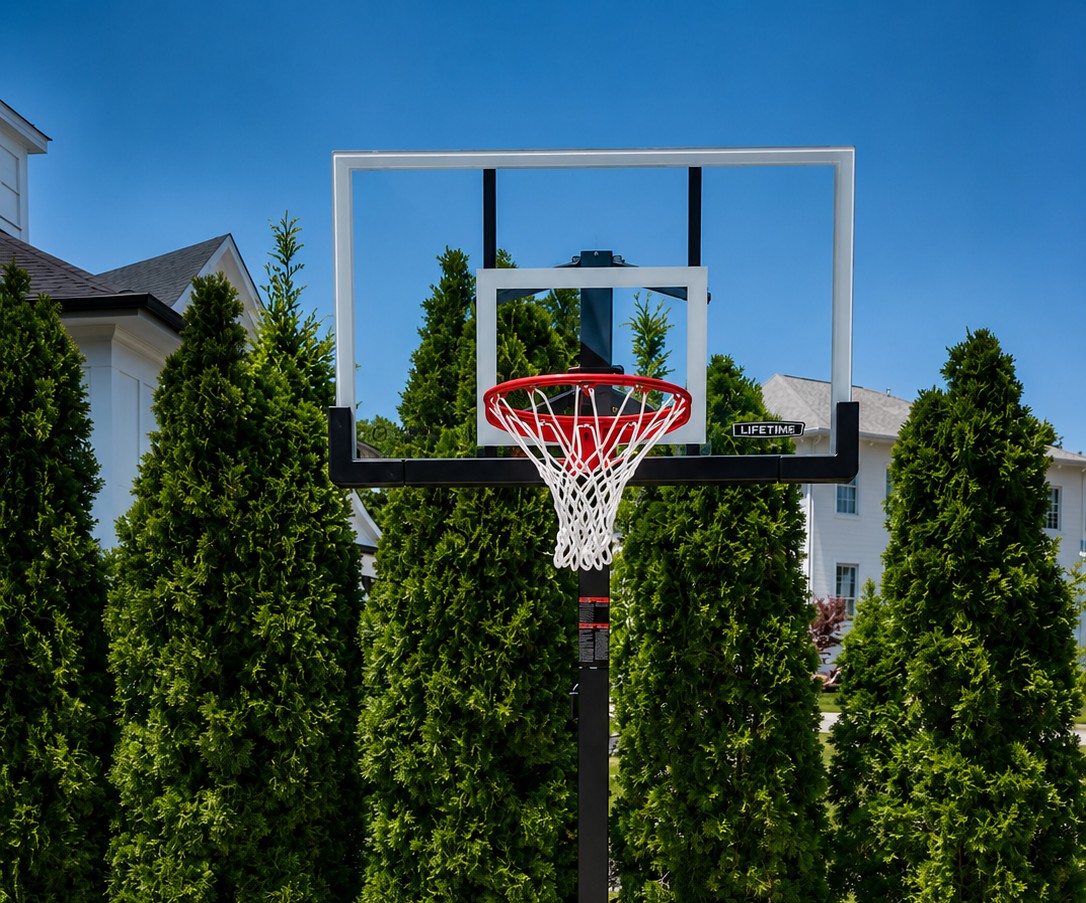
Hoop work without the guesswork
Basketball hoop jobs can go wrong when the footing is off, the pole is not plumb, the anchor plate is misaligned, the portable base is underfilled, or the replacement backboard and rim hardware do not match the existing system.
We look at the hoop type, model, base, anchor system, concrete area, access path, hardware, and final setup needs before treating the job like a simple assembly.
Common basketball hoop jobs
We handle new installs, old removals, portable assembly, relocation, leveling, replacement parts, and practical correction work when the system and site allow it.
- In-ground basketball hoop installation
- Portable basketball hoop assembly
- Hoop leveling and releveling
- Backboard and rim replacement when parts are compatible
- Basketball hoop relocation planning and service
- Old hoop removal and planned haul-away
- Concrete block removal when access, size, depth, and disposal scope allow
Leaning, loose, or unstable hoops
A hoop can lean or feel unstable because the anchor hardware loosened, the pole shifted, the concrete footing moved, the surrounding ground settled, the pole was set out of plumb, or the portable base is not filled or seated correctly.
Some anchor-plate systems can be adjusted through the base hardware. Direct-bury poles, bent poles, shifted concrete, and damaged anchor systems are more limited and may not fully correct without larger work.
Old hoop removal and concrete work
Old basketball hoops are often rusted, seized, concreted deeply, or unsafe to remove as one piece. Removal may involve taking down the backboard and rim, lowering or cutting accessible pole sections, digging around the base, separating material, and planning haul-away.
Full concrete footing removal is separate from basic hoop removal. Whether it makes sense depends on footing size, depth, access, nearby obstacles, disposal weight, and how the old pole was set.
What can limit the job
Not every leaning hoop can be corrected. A bent pole, cracked base, shifted footing, stripped hardware, mismatched replacement parts, missing brackets, or cured direct-bury pole can limit what is possible during a standard service visit.
We do not promise same-day play after concrete work. Cure time depends on the manufacturer requirements, concrete mix, footing size, temperature, moisture, and site conditions.
Customers are responsible for identifying private buried lines such as irrigation, low-voltage lighting, drains, invisible fence wire, and other non-public utilities near the work area.
What to send before scheduling
Clear photos and model information help us quote the correct scope instead of guessing from a vague description.
- Brand and model number, if available
- Photos of the full hoop or unopened boxes
- Photos of the base, pole, anchor plate, or concrete area
- Photos of the backboard, rim, brackets, and visible hardware
- Photos of the driveway, yard, or proposed install location
- City/ZIP and parking or access notes
- Whether the job is installation, portable assembly, leveling, removal, relocation, or replacement
- Any known sprinklers, drains, lighting wires, or private lines near a digging area
Columbus and Central Ohio basketball hoop service
We regularly serve Columbus and nearby Central Ohio communities including Worthington, Dublin, Hilliard, Westerville, Gahanna, Reynoldsburg, Grove City, Delaware, Powell, Pickerington, Lancaster, Newark, and surrounding areas.
Larger or route-based Ohio projects may be available depending on distance, timing, scope, access, and whether the job can be scheduled efficiently.
Ready to schedule or compare hoop services?
Send the hoop model, photos, location, and what you need done. We will review whether the job is installation, assembly, leveling, removal, relocation, backboard/rim replacement, or another hoop-related service.